1. Slurry Treatment: Disintegration and Solubilization
Hydrodynamic Cavitation (HC) is a potent mechanical pretreatment for liquid manure (slurry) that enhances downstream anaerobic digestion.
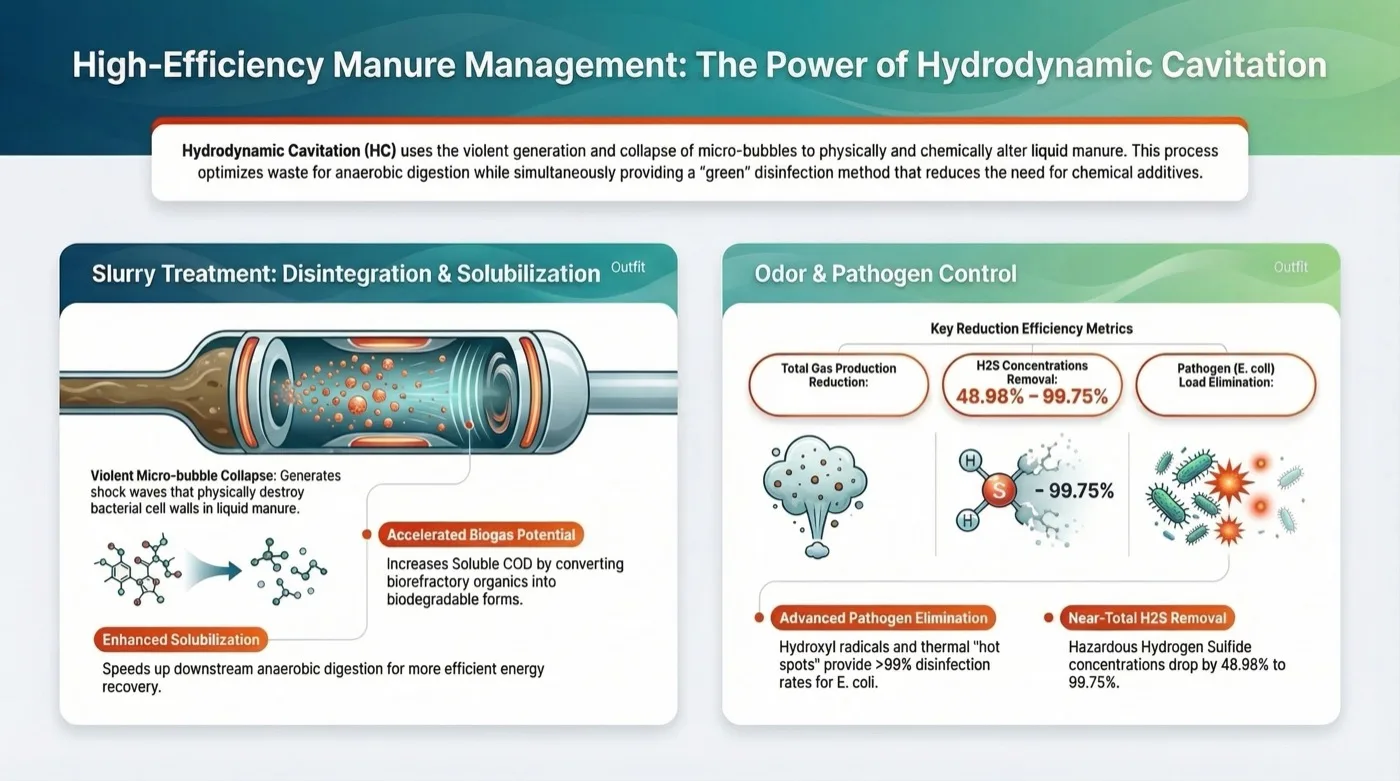
- Physical Disintegration: HC generates micro-bubbles that grow and violently collapse due to pressure differentials (e.g., in a venturi or orifice plate). This collapse generates shock waves and shear forces sufficient to destroy bacterial cell walls and disintegrate sludge flocs. This process releases intracellular organic matter into the liquid phase Mancuso et al., 2020.
- Solubilization (COD Reduction): By breaking down particulate matter, HC increases the Soluble Chemical Oxygen Demand (SCOD). This solubilization converts biorefractory organic compounds into biodegradable forms, making them more accessible for microbial digestion. Studies have shown that HC pretreatment can improve sludge solubilization and biodegradability, accelerating biogas production in subsequent digestion steps Mancuso et al.; Cako et al., 2022.
2. Odor & Pathogen Control
Advanced oxidation and cavitation processes are effective in mitigating hazardous emissions and pathogens in manure storage.
- Gas Reduction (H_2S, GHGs): In studies involving liquid dairy manure, treatments that introduce nanoparticles (analogous to the high surface area reactivity of nanobubbles) resulted in a 92–95% reduction in total gas production. Specifically, Hydrogen Sulfide (H_2S) concentrations were reduced by 48.98%–99.75%, and methane (CH_4) concentrations were reduced by over 99% in treated samples. The mechanism involves increasing the pH (preventing VFA accumulation) and inhibiting the methanogenic and sulfur-reducing bacterial populations Sarker et al., 2019.
- Pathogen Inactivation: The collapse of cavitation bubbles generates localized "hot spots" (high temperature and pressure) and hydroxyl radicals (^\• OH) that physically and chemically attack pathogens. HC has been proven to effectively disinfect water by rupturing the cell membranes of bacteria such as E. coli and reducing microbial load in wastewater effluents Mancuso et al., 2020; Sun et al., 2020.