What was measured
The club’s irrigation water carried a high load of minerals and salts and little dissolved oxygen (DO). On the greens that showed up as salts building in the profile, poor water penetration, and a maintenance load of frequent aeration and chemical treatment. The pilot asked one question: what changes on a green irrigated with oxygenated water, against greens that are not?
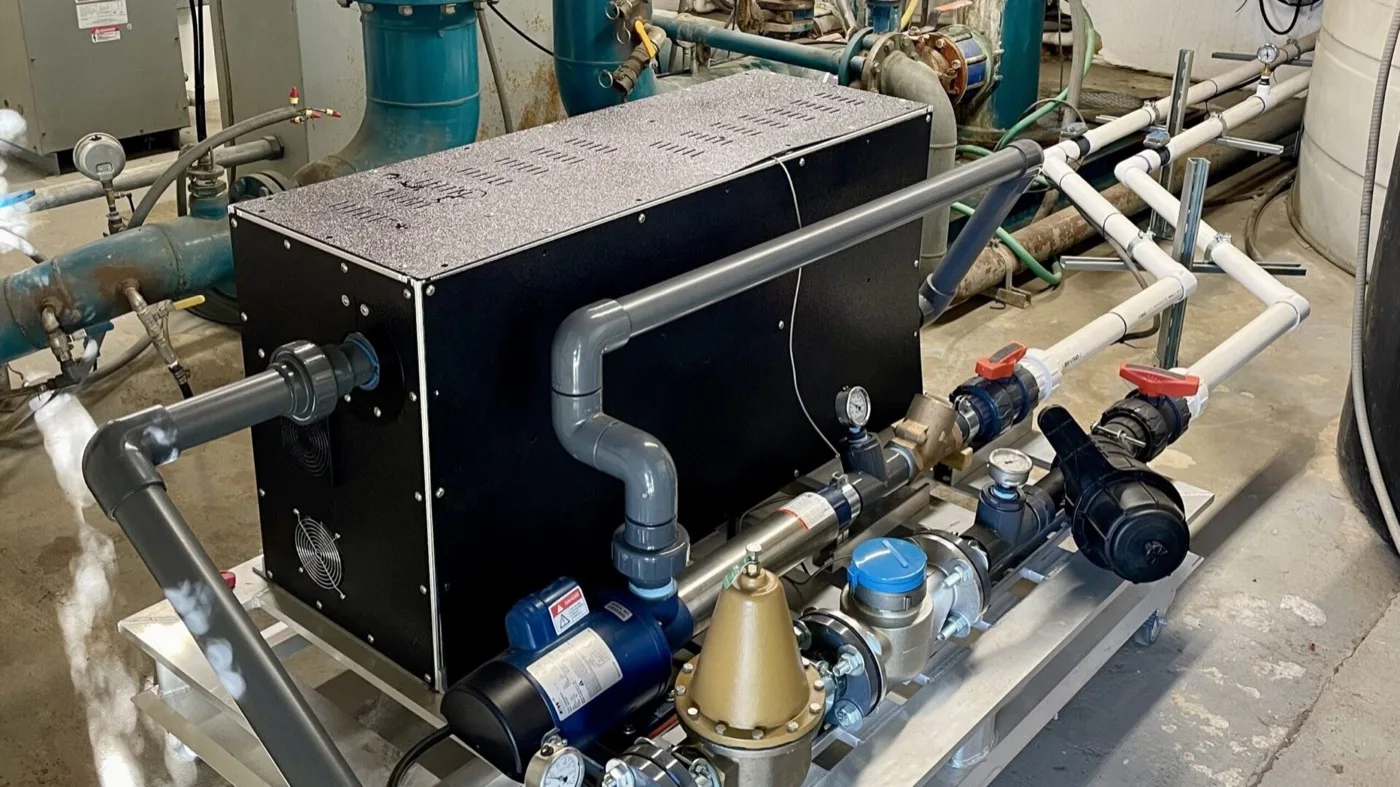
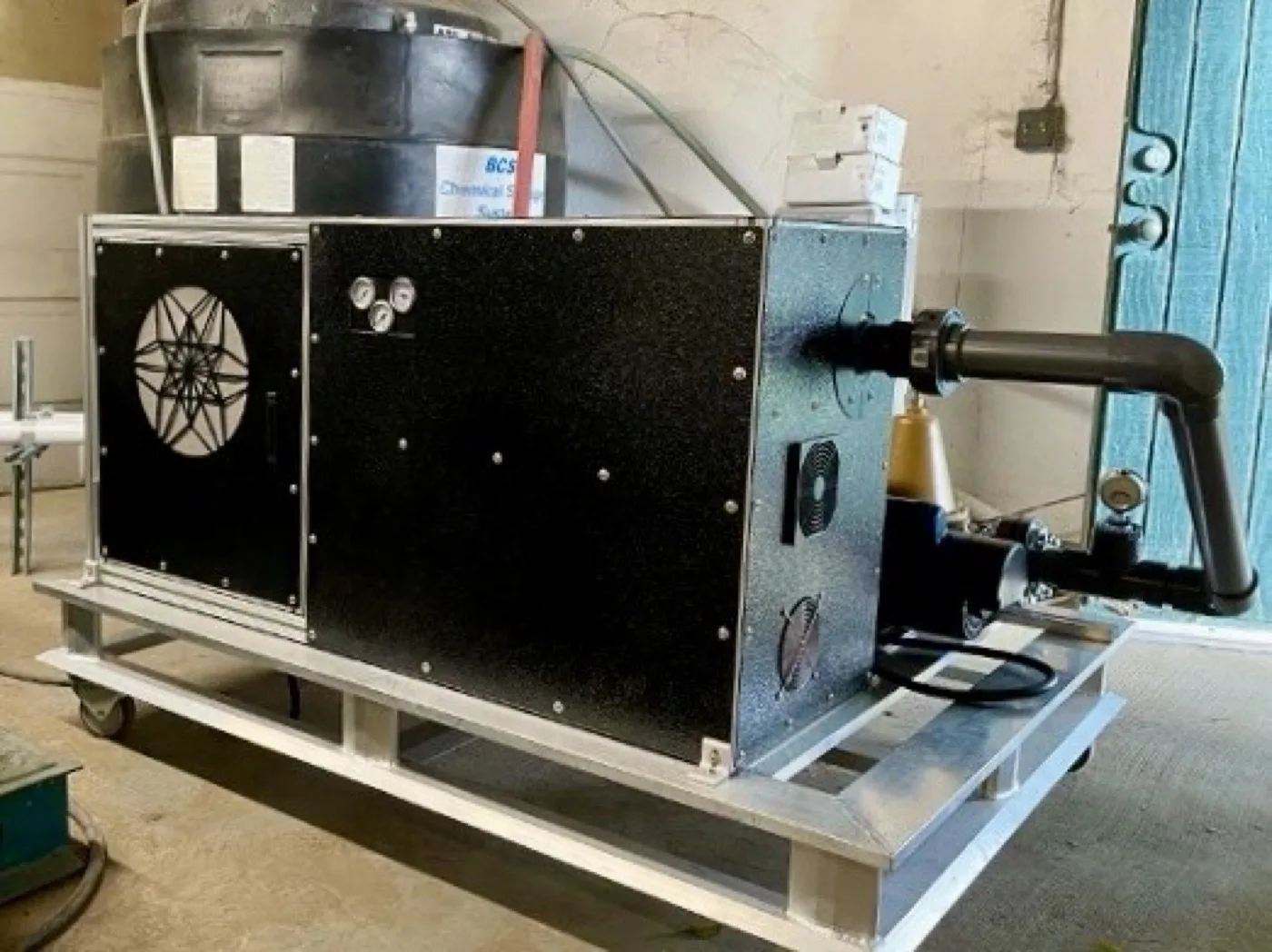
- Setting. The KST Skid installed in the irrigation pump house, injecting oxygen and ozone as ultrafine bubbles into the water that irrigates Green #9.
- Comparison. Green #9 treated; Greens #7 and #8, on the untreated supply, as controls.
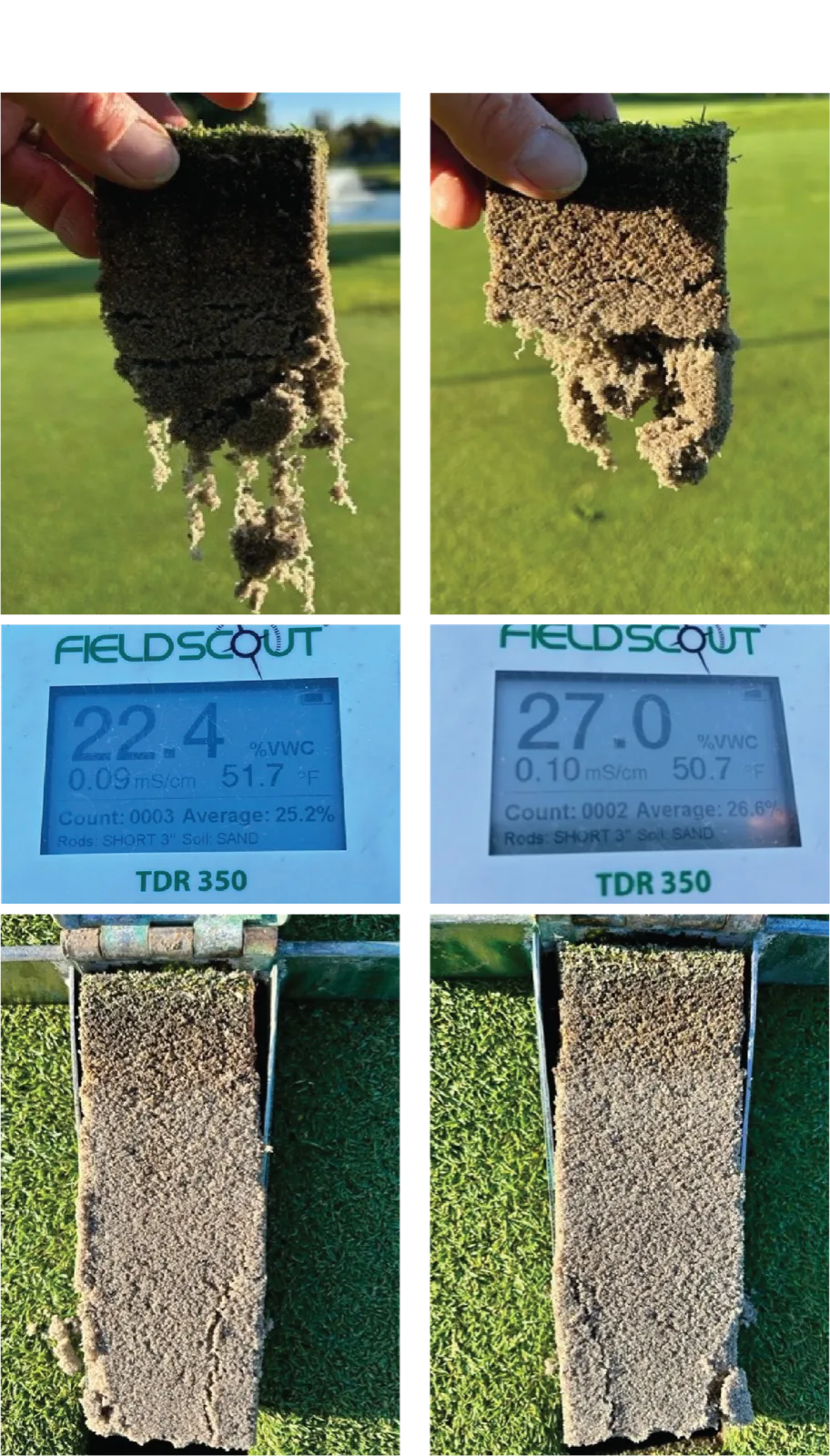
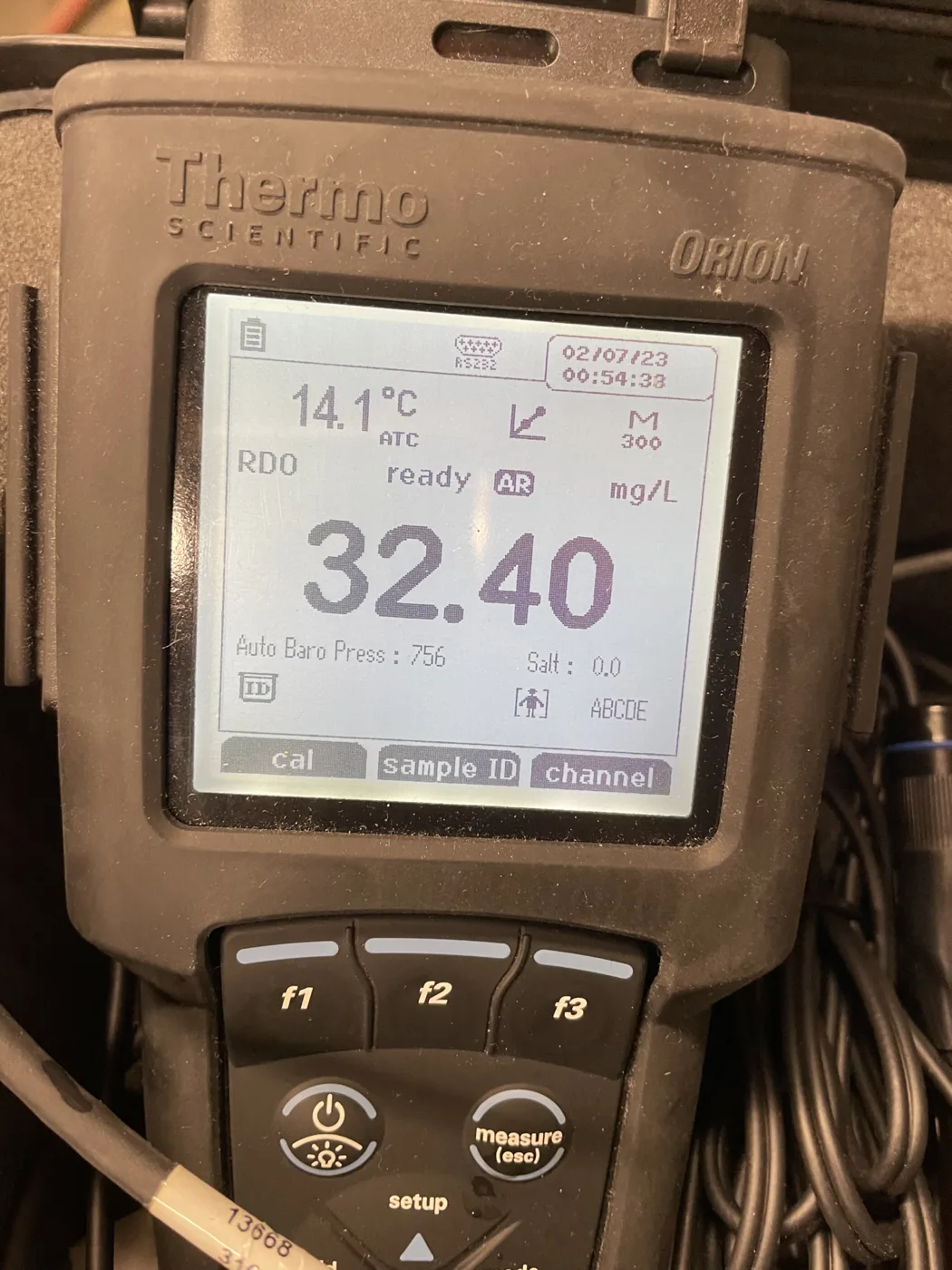
- Instruments and protocol. Soil electrical conductivity (EC), volumetric water content (VWC) and dissolved oxygen logged through the pilot; soil samples taken at intervals to assess root development, compaction and turf condition. The paired photos below include the FieldScout TDR 350 probe readings for VWC and EC.
- Duration. Three months.
Results
- −35.4% compacted salts · KST field data
Measured on Green #9 against Greens #7 and #8, same source water, over three months. - +24.7% water penetration · KST field data
Same green, same controls, same period. Less water pooled on the treated surface, and the paired cores show deeper rooting on the treated plot — a visual observation, not a measured figure. - +300% dissolved oxygen · KST field data
In the treated irrigation water against the untreated supply. This is the input, not an outcome: it is what the system changed, and the salt and penetration figures above are what it moved. - Fewer aeration cycles and chemical treatments · KST field data
Recorded on the treated green, with a visible reduction in algae growth. No figure was kept for either.
The economics are a projection
The club’s annual water bill is $200,000 and its labor budget $500,000. The pilot did not track spend against either line, so no dollar saving was measured. The club’s own read was that better penetration and healthier turf would move both budgets, and it evaluated the system on that basis. Projection, not measured
What this does not show
- One site, one treated green. It is a result at Yorba Linda Country Club under that club’s water and soil over three months — not an expected value for another course.
- Turf, not a food crop. It says nothing about yield in any crop.
- The +300% describes the water, not the turf. Quoted alone it states an input as if it were an outcome; the three figures travel together.
- Oxygen and ozone were injected together, so the result belongs to the combined treatment, not to oxygen alone. No dollar saving was measured; the budget figures are a projection.
Glossary
Soil conductivity (EC)
The electrical conductivity of the soil, read with a probe. It tracks salinity, nutrient content and moisture together, so a map of EC across a green shows where salts are building and where irrigation or fertilizer can be adjusted.
Volumetric water content (VWC)
The share of the soil’s volume that is water, read with a probe as %VWC. It tells a turf manager whether a green is getting enough water without over-watering, and where to target irrigation or amendments.
Dissolved oxygen
The oxygen dissolved in irrigation water, in mg/L. Roots respire, and water carrying more oxygen supports root respiration and the aerobic soil microbiology around the roots. It is not a sanitizer and runs alongside a turf-health program, not in place of one.